
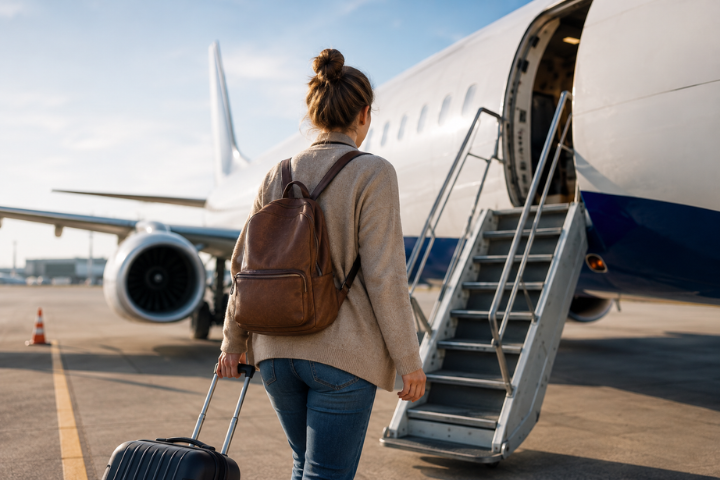
Constipation when travelling is one of the most common gut complaints I hear from clients. Even people who have no issues at home can find their bowels completely shut down the moment they board a plane or cross a time zone. And for those who already deal with sluggish bowels, travel can make things significantly worse.
The good news is that travel constipation is largely preventable — if you know what’s driving it and what to pack in your toolkit.
Why does constipation when travelling happen?
Your gut is a creature of habit. It runs on routine, circadian rhythms, familiar food, adequate movement, and a stable nervous system. Travel disrupts all of these simultaneously, which is why the bowel often rebels.
The main drivers of constipation when travelling include:
Inactivity — extended periods of sitting during flights, trains, or car journeys significantly slow gut motility. Regular movement is one of the most important drivers of bowel regularity, and travel removes it for hours at a time.
Dietary changes — access to fresh, fibre-rich food is often limited when travelling. Airport and airline food tends to be low in fibre, high in refined carbohydrates, and lacking in the plant diversity your microbiome relies on. Dietary disruption is one of the most overlooked drivers of constipation when travelling.
Dehydration — fluid intake often drops during travel. Cabin air is particularly dehydrating, and people frequently reduce drinking to avoid using aeroplane bathrooms. Without adequate water, the colon absorbs more water from stool, making it harder and drier.
Sleep disruption and jet lag — your gut operates on a circadian rhythm just like the rest of your body. Time zone changes and disrupted sleep alter the timing of bowel contractions, which can shift your normal defecation pattern significantly. When the body wants to move its bowels at 3am local time, and you suppress that urge, stool becomes harder and the urge weaker.
Suppressing the urge — many people are reluctant to use unfamiliar bathrooms. Consistently suppressing the defecation reflex causes stool to remain in the colon longer, reabsorbing water and becoming increasingly difficult to pass.
Traveller’s diarrhoea followed by constipation — a bout of traveller’s diarrhoea from contaminated food or water is often followed by a rebound period of constipation as the gut recovers. This is very common and worth anticipating.
Pathogens — occasionally, people pick up bacteria, parasites, or other organisms while travelling that can disturb gut function in multiple ways, including constipation, diarrhoea, or an alternating pattern of both.
Stress — the anticipation of travel, navigating airports, schedule changes, and being out of your normal environment all activate the stress response. Stress directly impacts gut motility via the gut-brain axis, can increase pelvic floor tension, and alters gut microbiome composition — all of which contribute to constipation.
My toolkit for preventing constipation when travelling
Here’s what I pack and what I recommend to clients travelling with already-sensitive guts:
BetterMe Tea
My first travel essential. BetterMe is a naturopath-formulated herbal tea containing licorice root, ginger root, aniseed, and cayenne pepper — herbs that support digestive function, ease bloating, and promote bowel motility. I travel with a BPA-free flask so I can brew it anywhere. Two to three cups daily keeps things moving even when everything else is out of routine.
[Shop BetterMe Tea]
Magnesium bisglycinate
I never travel without magnesium. Magnesium supports smooth muscle relaxation in the intestinal wall, promotes the osmotic draw of water into the bowel, and helps with the nervous system regulation that stress disrupts. Magnesium bisglycinate and citrate are the best-absorbed forms for bowel support. Take with a large glass of water in the evening.
PHGG — Partially Hydrolysed Guar Gum
PHGG is one of my most reliable travel companions for gut support. It is a water-soluble, non-gelling, non-viscous prebiotic fibre that dissolves completely in water or any beverage without changing the texture. Research shows that PHGG accelerates colon transit time — particularly in those with slow transit — increases beneficial bacteria, including Ruminococcus and Faecalibacterium, and supports SCFA production.
I recommend 5g once or twice daily mixed into water, a smoothie, or any drink. It is well tolerated, causes minimal bloating, and is easy to pack in a small container or pre-measured sachets. This is particularly useful for clients who know travel consistently derails their bowels.
Fibre-rich food choices
Prioritise fibre wherever possible — even in airports and on the road. Look for fresh fruit, salads, legume-based dishes, oats, and vegetables. Some of the best travel-friendly high-fibre options to pack include flaxseeds (easily added to any meal), kiwifruit (available almost everywhere), and berries. Avoid the temptation to default to processed, low-fibre convenience food for the duration of the trip.
Hydration
Aim for at least 2 litres of water daily — more on flying days. Bring a BPA-free water bottle and refill it consistently. Dehydration is one of the most easily addressable drivers of travel constipation and one of the most commonly overlooked.
Probiotics
A travel probiotic is worth considering, particularly for longer trips or travel to regions with higher food safety risk. Lactobacillus rhamnosus GG and Saccharomyces boulardii have the strongest evidence for traveller’s diarrhoea prevention. Specifically for constipation, Limosilactobacillus reuteri DSM 17938 (previously known as Lactobacillus reuteri) and Bifidobacterium lactis HN019 have evidence of improving transit time and stool frequency. Starting a probiotic a week before travel gives it time to establish.
Movement
Move as much as possible throughout travel. On long flights, get up and walk the aisle regularly. At your destination, prioritise a daily walk even if your exercise routine is otherwise disrupted. Movement directly stimulates gut motility — even 20–30 minutes of walking can make a meaningful difference to bowel regularity — and it’s one of the simplest ways to manage constipation when travelling.
Bowel positioning
This one is easy to overlook when away from home. If your accommodation doesn’t have a toilet stool, improvise with a small bag or a stack of books under your feet — anything that brings your knees above hip level. This position relaxes the puborectalis muscle and puts the colon in a more anatomically ideal position for complete evacuation. It makes a genuine difference, particularly when everything else is already working against you.
Vagal nerve support
The vagus nerve plays a direct role in gut motility, and stress suppresses vagal tone. Simple daily practices can help maintain it during travel: diaphragmatic breathing, humming, cold water splashed on the face, and gentle movement. These are easy to do anywhere and support both nervous system regulation and gut function.
Respond to the urge
This sounds simple, but it’s one of the most important things. When you feel the urge to defecate — even in an unfamiliar bathroom — respond to it. Suppressing the urge repeatedly causes the reflex to weaken and stool to harden. Respond promptly, especially in the morning when the gastrocolic reflex is at its strongest.
When does constipation when travelling need professional attention?
Occasional constipation during travel is common and usually resolves once you return to your normal routine. However, if your bowels are consistently disrupted by travel — or if you’re dealing with chronic constipation that travel simply makes worse — there is likely an underlying driver worth investigating.
SIBO, gut microbiome dysbiosis, pelvic floor dysfunction, and stress-gut dysregulation are all common contributors to travel-triggered constipation that don’t resolve on their own. If constipation when travelling is a recurring problem for you, it’s worth investigating the underlying drivers
Want to understand what’s really driving your constipation? My guide Get Things Moving covers the 10 root causes of chronic constipation in detail — including the specific foods with the strongest clinical evidence, foundational strategies you can start today, and clear guidance on when professional support is the right step. Every recommendation is backed by peer-reviewed research. [Download your copy for $37 AUD]
As a naturopath with extensive experience in gut health and constipation, I use breath testing, microbiome testing, and a thorough case history to identify what’s driving your symptoms — and build a plan tailored to your situation.
You may also like
Thank you Eliza…Can I suggest having a cup of BetterMe tea the night before your drive. This may help with a morning evacuation. 🙂